From Our Blog
What Dentists Look For During an Oral Cancer Screening
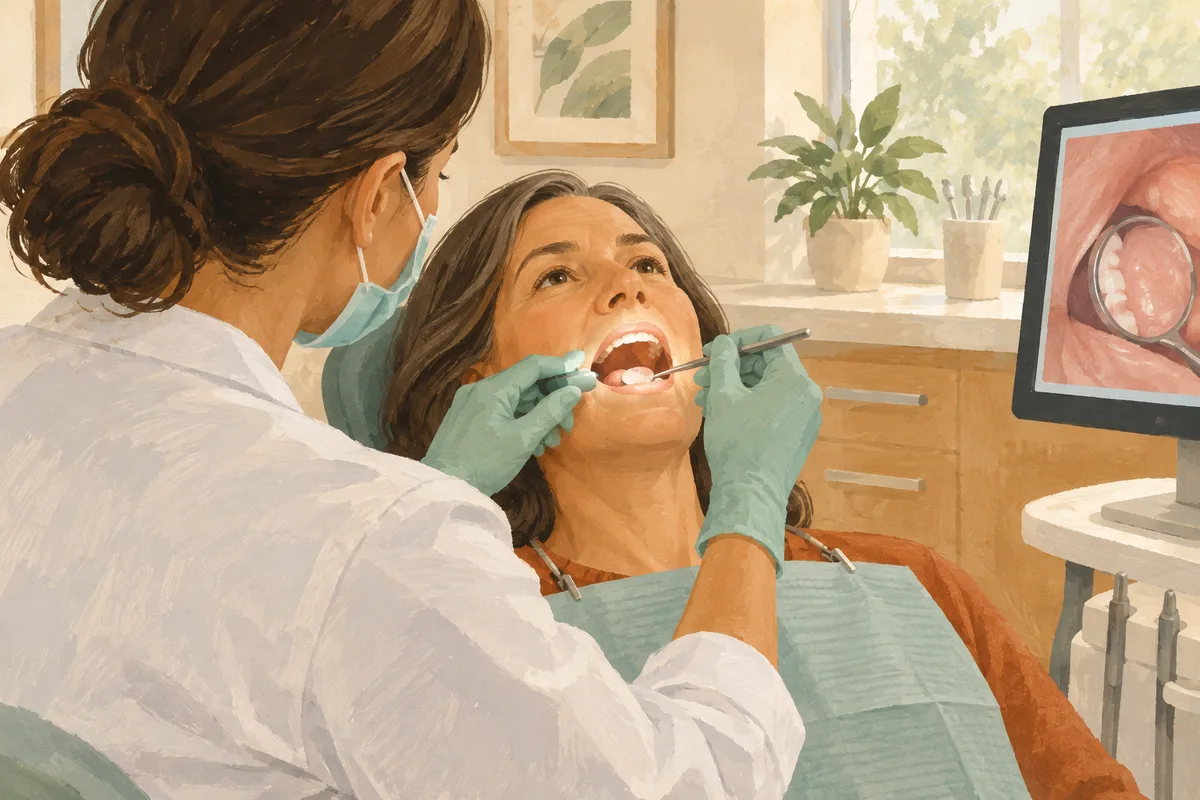
An oral cancer screening is a check for changes in and around the mouth that might need a closer look. Some changes are easy to see, like a sore on the lip. Others are easy to miss, like a flat patch under the tongue or a spot inside the cheek that feels firmer than the tissue around it.
Dentists use both sight and touch because an unusual area may not hurt or look dramatic. Finding a change does not mean it is cancer. The screening helps the dentist decide whether something needs further evaluation.
Small changes on the lips, cheeks, and tongue
The dentist looks at the lips, including the inner surface, and gently pulls the cheeks aside to see their lining. A spot that stays red or white, a sore that hasn’t healed, or an area that feels thick or firm can stand out. On the lip, the dentist may also notice a crusted or scaly spot that keeps coming back rather than healing.
The top of the tongue is easy to see, but its sides and underside are harder to check on your own. The dentist may use a piece of gauze to gently move the tongue and see those surfaces, along with the floor of the mouth. Touch helps the dentist check for a small lump or a firm area that may look no different from the tissue next to it.
What the throat and neck can reveal
With your mouth open, the dentist can look at the soft part of the roof of your mouth and the visible area near the tonsils. They may notice an unusual patch, swelling, or a difference between the two sides. Some areas, including the base of the tongue and deeper parts of the throat, are hard to see during a dental exam. A screening cannot rule out every problem in those areas.
The dentist may also use their fingertips to feel under the jaw and along the sides of the neck for lumps or swelling. Lymph nodes can swell for many reasons, including common infections. How a lump feels, how long it has been there, and whether it is changing are all useful details when deciding if it needs a closer look.
Risk factors beyond tobacco
Tobacco is a risk factor, but it is not the only one. Heavy alcohol use raises the risk of cancers in the mouth and throat, and using alcohol and tobacco together raises it further. Long-term sun exposure can raise the risk of lip cancer. Risk also tends to rise with age.
Certain types of human papillomavirus, or HPV, are linked to cancers in the back of the throat, especially near the tonsils and the base of the tongue. That is a different area from the cheeks or the front of the tongue. A person can develop cancer without an obvious risk factor, so a lasting change is worth mentioning even if you have never used tobacco.
Why it helps to mention a change
A cheek bite or a rough tooth can leave a sore spot, so what matters is not just how an area looks but whether it gets better. A sore, patch, or lump that lasts about two weeks without improving is worth bringing up. Ongoing trouble swallowing or a feeling that something is stuck in the throat is also worth mentioning, even when you can’t see a change in the mirror.
If you have a personal question, you can call Prime Choice Dental and describe what you’ve noticed. It helps to know when the change began, whether it has grown or changed color, and whether it comes and goes. You don’t need to know what caused it to start that conversation.
Questions about your own care? The team at Prime Choice Dental is happy to help — call us at (215) 276-4532.
This content is for general information only and isn't dental or medical advice. Talk with your dentist or orthodontist about your own situation. If you have a medical emergency, call 911.